


Self reliance, being alone and code switching abroad
- Oct 29, 2021
- 23 min read
Updated: Nov 15, 2021
FULL EPISODE TRANSCRIPT
Episode 2: In this episode, I discuss leaving behind a big family to live alone abroad and the coping mechanisms I developed. I also speak on self-reliance, loneliness, inner child, and code-switching in a foreign language.
Sagal [host]: Hello everybody, what's up everybody! Thank you so much for joining me for another episode of memnoire, a podcast dedicated to the experience of black people who go abroad.
In this week's episode, I'm gonna be discussing a range of topics, I'm gonna be dipping my toes in various topics. So I'm gonna speak about the change from being in a big family to being alone on your one's, different coping mechanisms I used, self reliance, self parenting, and then just like a little bit on code-switching in the UK versus abroad, and then even within a foreign language. So I'm gonna just jump straight in.
By the way, if you hear a little train... if you hear a likkle [...] if this whole thing starts vibrating, just understand that I live next to a train station, and I'm recording this in my bedroom. So if everything starts shaking, you start hearing da-dush, da-dush da-dush [sound of train passing by], just understand the ghetto is real for some of us, you know [laughter].
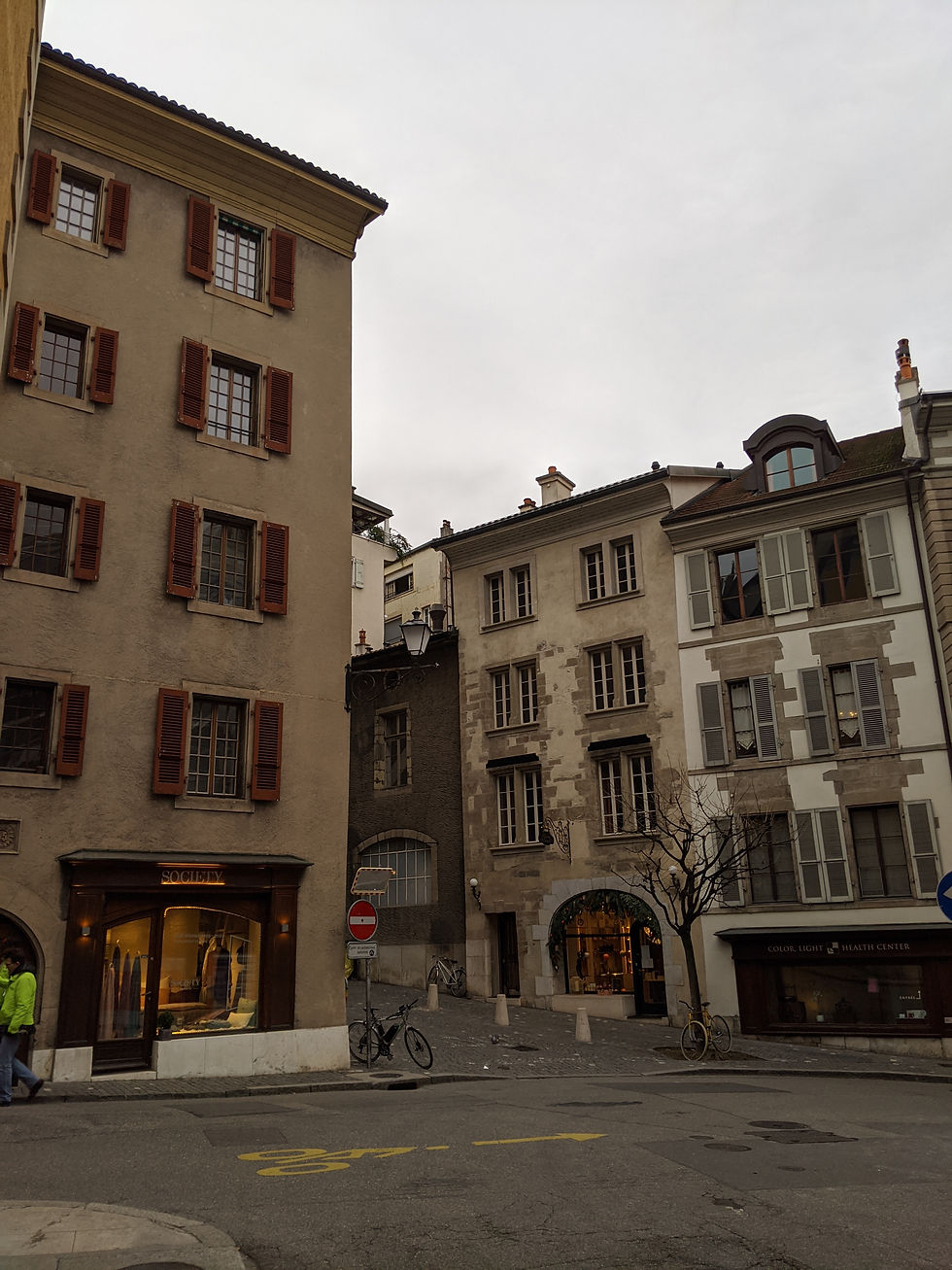
Anyway, Imma go back a bit, I'm gonna reel it back a little bit and I'm gonna talk about Geneva. So I realized I didn't really explain properly like what I was actually doing there. So maybe some of you might understand / might know the process already. But basically, when you're in your second year of university, you basically pick where you want to go to, so we're given a range of destinations and then teachers just kind of like they give you information. It's like you know, make your decision and then pick and then there's all this paperwork and stuff and so there wasn't ... I'm not gonna lie ... me, you think I'm gonna go to France. So France was absolutely "ex'd" off. And the (other) option was Canada - I'm like I aint tryna speak like dem people there, like the people from Quebec they have a weird accent. So (I was like) you know what, let me go Geneva - international city, what the UN is there, all these organisations are there so I'm thinking you know what, it might even be good in the long term.
So boom, I picked the location everything and then I got there in September and there was hella paperwork, so much stuff to get done and accommodation, the stress of that, like accommodation is a whole nother topic, which I might … I may discuss. We gon see, we gon see. But yes, I was studying at the University and I was studying at the Faculty of Translation so the university is big, the buildings are all spread around the city, which is the thing I love actually. And Geneva is mad small. So it's like you travel everywhere … like you can get everywhere by bus and it is like 20 minutes / 30 minutes it's really easy to get around. And so yeah, I was studying at that faculty which is called the faculty of translation and interpretation. And not gonna lie beforehand, I thought it was gonna be boring because I'm like, translation is dead because especially whenever I tell people that I study language, the first thing that comes to their mind is like “Oh are you gonna go into translation?”. So that’s why I’m always like I’m not tryna do translation … I aint tryna do none of that. It just seems so boring. And when I actually went there, I'm not gonna lie, it's actually highkey very interesting. Like the study aspect of going abroad was definitely a highlight. I loved the study aspect of it. The uni life and everything and just the quality there is great. And the campus is very diverse. It was like, I didn't feel out of place there. But let me tell you ... some habits never leave. Yeah, because why am I being late? Why am I ... Why am I coming late to so many classes! Is it everyday come late? [Nella Rose voice] Are you not embarraazed? This is really embarraaazing. I'm coming late to all of my classes, to the point, lecturers are surprised when I come on time. I said, I'm not going to change my habits. I said, some habits are never gonna change. And I decided to bring my trash UK habits and bring it to Geneva. When I say trash you say sagal. Fam that's really something that’s actually like a deeper thing I need to pattern, cuz I don't think that's ever gonna leave me.
But I digress. Yeah, so that's basically like, a really, really quick summary of like, the studying aspect of it. And then obviously, Madrid was like the same thing studying like, and I actually did have the option to study or work, but I was like, I’m not gonna lie I don't really feel like working. I don't want to be an independent woman yet. I want to ... I want to study ... I want to be a student.
I mentioned in the beginning, one thing I really want to discuss, which I think is something that a lot of people can relate to, is going from being in a big family, being constantly surrounded by people, and constantly being surrounded by a family and having that support system there to then being alone. And so like coming from a big family, you're so so used to people being in your space, people being around you 24/7, and yeah like I said having that support system and also like zero privacy. Ain't no privacy in my house! So going from that to having no one and being on your ones (own) all the time is mad strange. It's like a really weird process. And so like, obviously, there's an attachment thing that comes with being in a family or you become attached to people and it's really difficult to, to accept and enjoy being in your own presence. And so there was a lot of things I had to like really just like pattern that like I had to really set up coping mechanisms in the sense or things I did when I routines to make sure that I didn't really wasn't feeling it too much.
One of the things is mental health wise was something that I was really conscious of. And actually, before I left, I remember reading this article that was like, if you have any, like mental health concerns, or just basically like, if you're not really strong in the aspect, like it could get worse from being abroad. And obviously it makes sense that you're not … you don't have the same support system, but that was something in the back of my mind. So like I had already told myself like, calm, when you get there you’re gonna look around, you're going to make sure that there’s certain things in place, you're going to make sure that you have, you know, you have certain things in place for you to make sure that you're not struggling too much.
And so one of the biggest things for me is sports, like ever since ... literally every since I can remember sports has been a massive thing for me. I notice for myself personally how much it helps my mental health and so I'm like, I told myself “Listen, when you get there, you need to find the sports programmes” and like, all praise to God, I found [a few]. It was free which is great because I'm a cheapskate y’all - I’m not trying to spend money. Listen, I barely go to the gym, do you think I pay for a gym membership? I want everything to be free. So yeah, I joined the football team and everything and it was lovely having that space there for you. And just to like, just to chill and like to release steam and to, like, you know, have fun and stuff. Likewise, when I went to Madrid, that was one of the first things I tried to do - like to find sports and to try and have these things put in place.
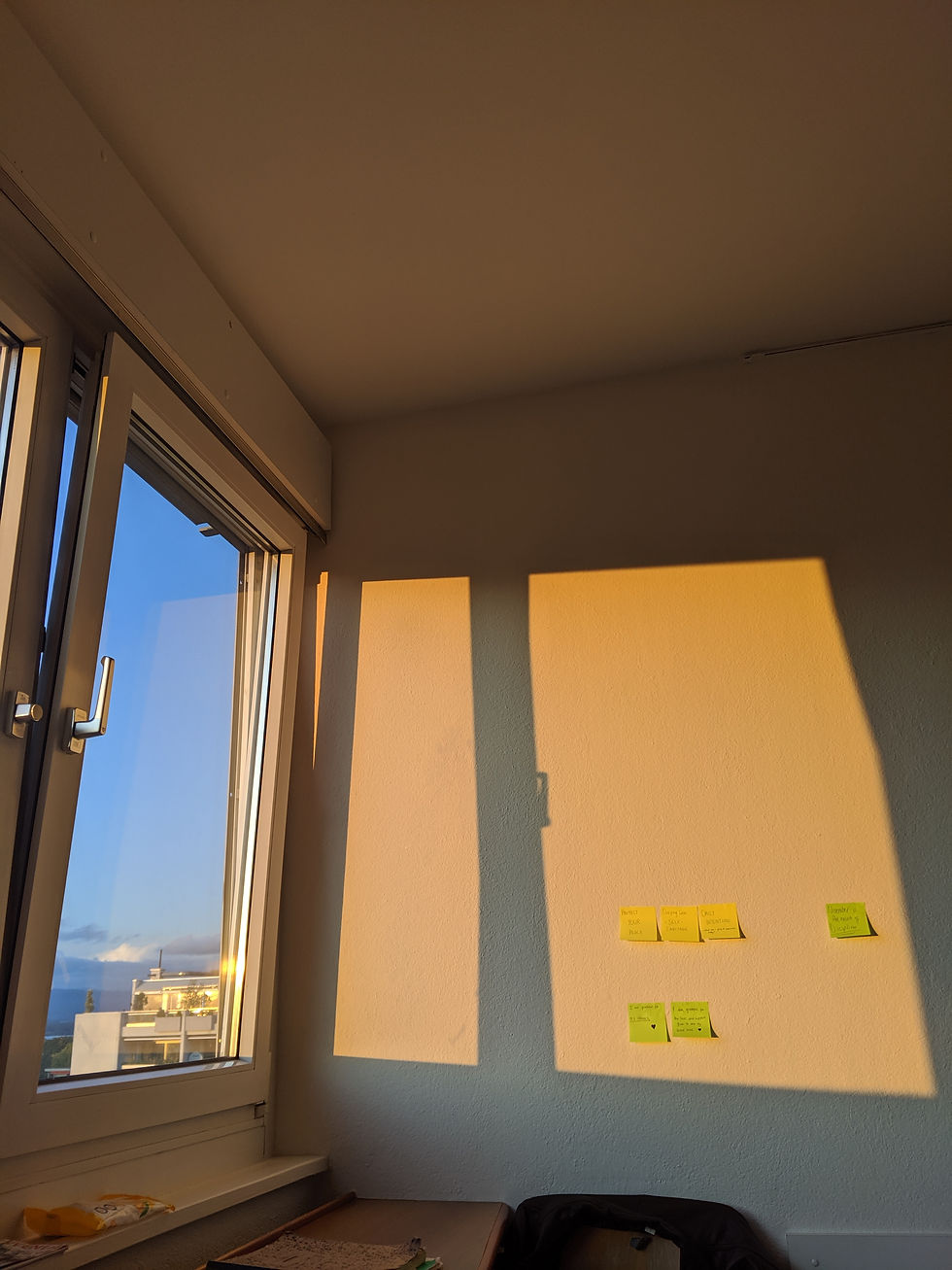
Another thing I did which was so important for me was post-it notes with self affirmations. Like, when I first got to the accommodation, the walls were empty, it was just very bare and everything. So basically, I would like get these post-it notes and write like self affirmations or just like statements or things that I'm grateful for, and just stick them around, and use them to remind myself constantly, which was, for me, it was really, really useful. And it was kind of like a repetition method in a sense, where I would like to look at it and be reminded of why I'm even there ... like my intentions and what I want to get out of this experience. And just, it would remind me to go out and make the most out of every day. I think checking your intentions before you do anything is so good.
Another thing that was really good in terms of coping mechanisms was journaling. Journaling ... the post it notes ... and another thing was like going out to places I enjoy constantly, like constantly doing things that I enjoy doing. And like it's probably like a big family thing again, where it's like, sometimes you have things that you think you enjoy, but you just enjoy doing it because your siblings enjoy doing it. But I actually got to experience things and do things I enjoy personally myself that my siblings would probably be bored out of their minds doing.
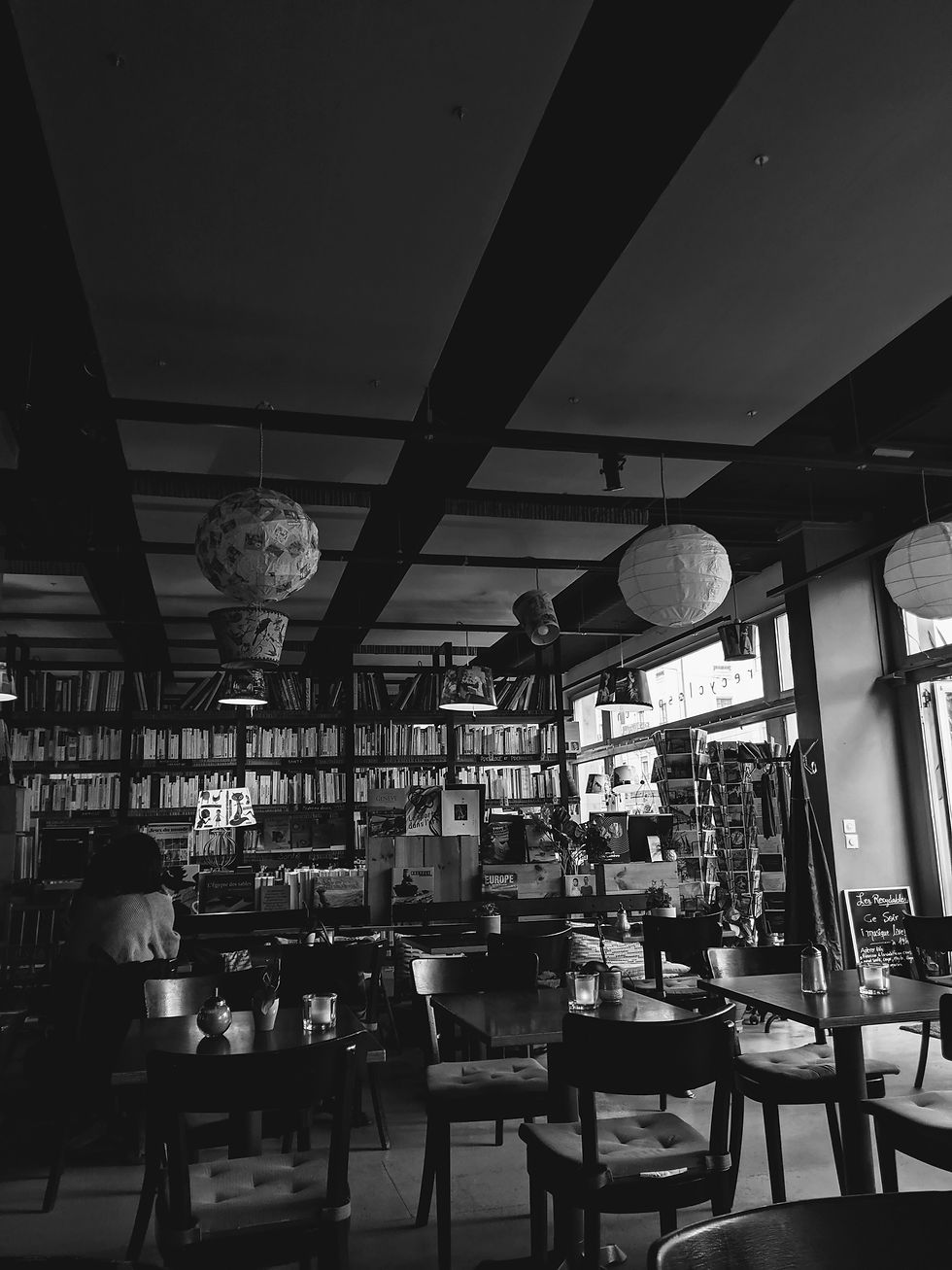
One thing I really liked doing is coffee shop hopping and bookshop hopping. When I got there, I made like a list of all of the different book shops I wanted to go to and I made a list of them up, I put the address and everything and like whenever I found time I'll go to them and like just tick them off [the list]. And so basically like doing things I enjoy doing and like was, for me ... all these things were things that helped me to cope with being away from family for a long time, because feeling homesick is another thing as well. Like there would be times where I felt homesick. And so what I would do is like I would make Somali food and I’d play Somali music, and watch Somali videos and stuff just to make me feel like I'm at home. Because obviously one thing is like having phone calls and stuff with family and like FaceTime and that kind of stuff, but then another thing is that you're not physically there and like they're not able to come and visit you and stuff. So it's like making the food and you know, just playing some Somali tunes and just enjoying myself was one way to remind myself to make myself feel good at times.
Especially like there'd be times where I would really really miss being at home. And even just like FOMO ... like fear of missing out on things that's happening at home. So doing that kind of stuff really helped me to like to not feel so bad and to feel like to ... not feel so alone at times. Especially because I was on such a strict food budget yeah, and like I'm not going to lie we had like a … so obviously the accommodation is student accommodation right so the kitchen is shared so there'd be ... (I mean you shouldn't do this) ... but I bought obviously the basics like salt, pepper, paprika, the basic seasonings I needed and cinnamon (which is like my go to seasoning) ... and there was a cupboard and like people had put all their seasoning in this cupboard right. I'm seeing curry powder, I'm seeing all these different types of seasonings so best believe when I'm making my rice in there, I'm looking out of both doors making sure no one's around and I'm using everyone's seasoning. The whole corridor is gonna smell like Somali food - but we move! But yeah, it was just ... it was nice to do those types of things.
Obviously another big thing is calling home and doing FaceTime and stuff, even though my mum would love to leave me on read whenever I used to message her which is long! But yeah, so these are some of the things I did to cope with being away.
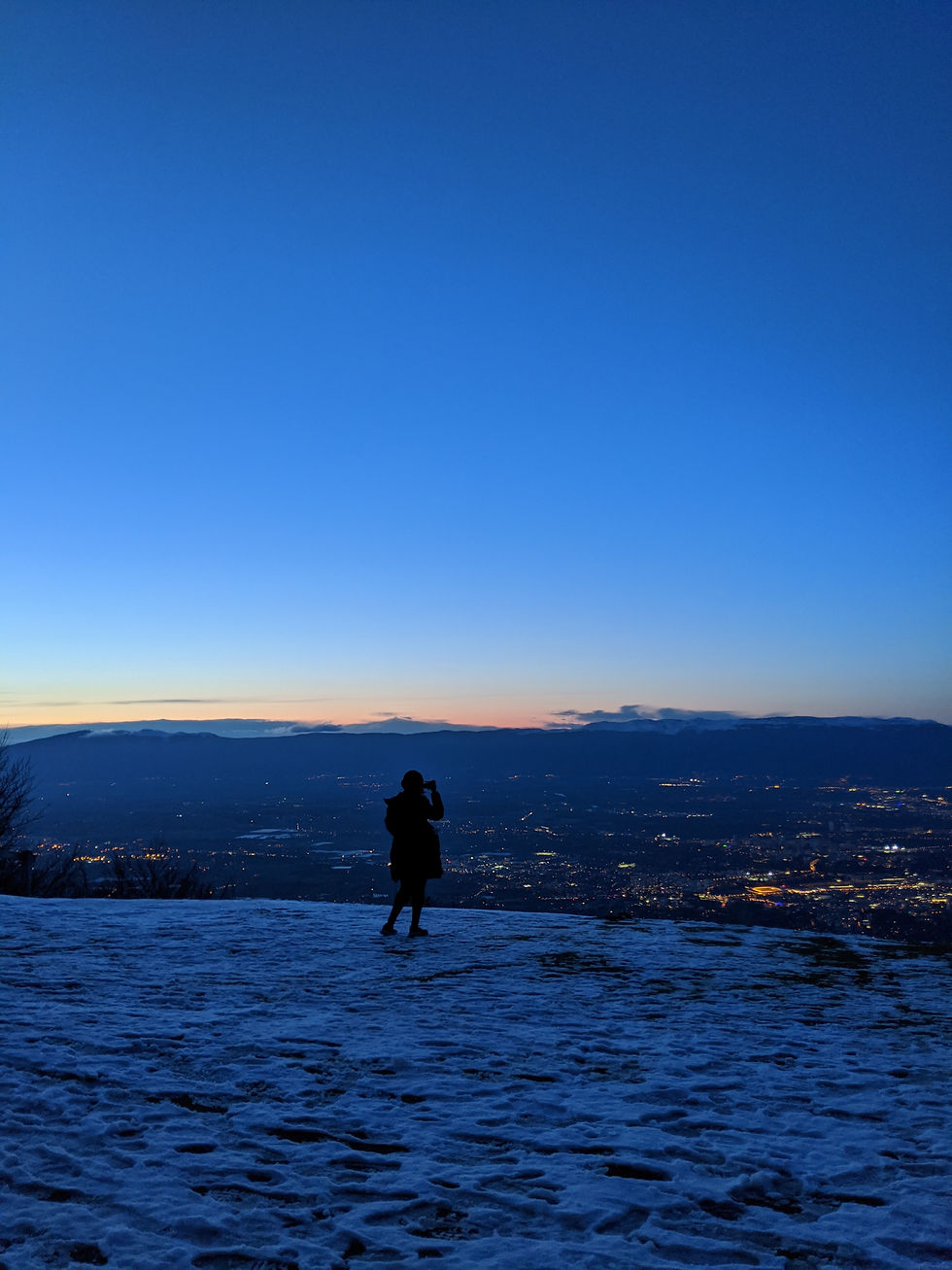
Another thing I wanted to speak about was the whole concept of being your own protector and like having your back and realizing that there's really no one else with you and that you're on your own but in the sense of like protection and self-reliance. And so like from the jump obviously I knew it was just me ... just me,myself and I and that my family were far away and I didn't really want to bother them or stress them. So I really knew that you know I have to have my own back. I have to rely on myself completely. And like I mentioned in the last episode or I think it was actually ... it was the episode with Ifrah - the first like special episode. The whole story with the stalker and stuff is like when that happened and I kind of slipped up like I wasn't paying attention, it reminded me that I need to be aware all the time, which is obviously something when you're abroad you naturally do that ... you're more cautious then normal than like back home and stuff. But when that situation happened, I was literally for the next two weeks, my eyes were alert and my eyes were wide open. When I was crossing the street I'm awake, I'm ready. I'm like, I'm literally on like, I'm so so alert and aware, which is, I mean, it was obviously, it's a negative thing, but it taught me a lesson of like, ‘Listen, don't put your guard down’, because you never know what's gonna happen. And so, you know, even with a story, I didn't tell my mum until, like, it was nearly time to get back. So, like, I didn't, I really didn't want to bother my family and stuff.
And like, part of like, self reliance for me was financial security. And that was like a massive, massive thing. Because like, obviously, coming from a working class background, there's a lot of insecurity that comes with finances. And being financially secure was important to me, because I didn't like again, I didn't want to burden my family with financial worries and that kind of stuff. And so, like, all praise to God, you know, they gave us bursaries and stuff. I keep saying it in plural, they gave us ‘A’ bursary, and I had to take out a Maintenance Loan. And I will speak more about money management in another episode. I have a specific guest in mind for that one. But yeah, that was like the most money I had ever seen in my account. Like, obviously, I've only ever worked a retail job before and always part time as well. I've never done full time because I’ve obviously been a student like for nearly all my life. So having money and actually like … you know them times I'm going into shops, and I'm not even triple checking my account. Normally, you know, fam even small, small Tesco, I'm going into the shop and I'm making sure as I go into Tesco, I'm calculating the prices of the stuff and again when I go to the till I'm like, ‘Okay, calm, this is gonna cost six pounds forty two and I have six pound 50’. You know them ones where I’m calculating every single thing. But it got to a point where like … and it was such a massive change for me, but I'm going to places for example, shops or whatever I don't know, like doing grocery shopping, that kind of stuff and I'm not actually checking my account because I know, I know, there's money in it. And it's just, it's such a … like that financial security was like, I've never had it to that level before but it was like a blessing. It was a massive blessing. And like when it comes to like financially … financially, physically, everything, I just I felt like a massive relief because a lot of my anxiety and I know a lot of like anxiety or like mental health concerns or worries that working class people deal with relates to finances and money. So having that on lock was such a massive massive blessing for me and like I'm so … I'm really grateful for that because it literally took away so much stress.
But like, another side of that coin is the whole thing of like the inner child and wanting to splurge on things and like, luxury items. And obviously because I was aware that I couldn't ask for money from back home, I had to pattern up differently - like money management was on 100. I was doing … I was doing strict budgets, I was paying my bills straight away .. and I was doing stuff like doing big shopping trips so I wouldn't have to do small purchases and then like doing meal prepping. I was proper on adult tings. Yeah, I was really like, I was just so organised. And like, especially the good thing is that Geneva is soo expensive so I actually picked a good first location because I actually couldn't eat out much. I can probably count on my hands the number of times I went out to eat and it’s calm because like, even in terms of like … people who are lactose intolerant will know that when you go out to eat yeah, you already know, that whole idea of lactose tolerance is going out the window because it doesn't exist anymore. Because more times when you go to a burger shop one billion percent, the chickens gonna have something in it. The food you're gonna eat is gonna have milk in it by force, there's no way about it. So not going out to eat actually helped me in the long term and like I mentioned lactose intolerance … like I'm gluten intolerant as well, IBS sometimes kicks in here and there so going out to do grocery shopping and doing these big shopping trips and during meal preps and that kind of stuff actually helped out my stomach in the long term.
And also fam I’m notorious for banging out Uber, but actually like I'm not gonna lie I think I only used uber three times maximum when I was there. And it was always like arab food or like Mediterranean things which is like decent for my stomach in it. But like health, my wealth, my skin has never been better than when I was in Geneva because I had everything under control and I think honestly I think a big part of it was just having like, like I said these coping mechanisms, having like routines, having systems in place, being financially secure and being financially good and having really good money management. And also the water in Geneva was beautiful ... crisp ... like just clean, the air was clean, clean clean. So obviously like that contributed. Fam rich people … rich people … when you see rich people with good skin is not random. Yeah, the air they breathe is cleaner air. The water they drink is cleaner water. It all makes sense.
But yeah, like I said, going abroad a lot of times you’re on edge. And the one thing that helps is people's kindness and just seeing familiar faces. That experience of seeing someone who's similar to you or just seeing people who are kind and just you know, random acts of kindness is just mad heart-warming. I remember one time I was taking the cab or actually I was taking an Uber because I was late to class … again, and I didn't want to be too late. So I just jumped on an Uber. And as the driver was dropping me off, (he was Sudanese) and he was like, “oh, have a good day my daughter”. My daughter! Wallahi my heart was like … oh my. Fam this is bare minimum. Obviously, it's not something massive, but even just that kind of random gesture of kindness [goes a long way]. And even stuff like ... when I would explore and things and I remember one time I went exploring, like in my area, and I went to like a random coffee shop or like a random cafe, and there was like an Eritrean lady who owned it. And she was just so sweet. And even people for example, like the people I met there, like people bringing me into their families and like having dinner with their families, like, just such kindness that like … these small gestures goes such a long way for someone who's not from the place. And even there was this one Somali restaurant in Geneva, the food, I'm not gonna lie, the food right there … I haven't eaten better Somali food in a restaurant before … better than London restaurants. Different, different levels wallahi.
So another thing I really wanted to talk about was code switching, and how that affects your mental health and how that affected my time in both places. But I mean, code switching is not like a new phenomenon. It's like obviously something that a lot of ethnic minorities do when they're in majority white spaces. Both in the UK or outside the UK, I experienced this, and I had to do this. And I think it's a reality of so many people. When it comes to the UK, it was a thing of … I was doing this in my classes a lot. So I've mentioned it like a couple times now but I go to Queen Mary, and so Queen Mary is actually one of the most diverse Russel group unis. If I'm correct, I think it’s 69% ethnic minority, which is a massive number, but the problem is in my actual courses… the number is not [that]. You don't see that, like my classes I mentioned, are very, very white. And so in my classes I'm doing … I'm not gonna lie, I've very quiet in my classes. I just don't … if I do speak, and if I do contribute ... actually you know what, in first year, I was super quiet. And it was like a different environment for me, even though I have grown up in a white area so I do know how to operate around white people. But when I was in these classes, it was like another level. Because I've always been used to being in school settings which are not so so so white, and which I'm not one of the only people in … one of the only ethnic minorities in that space. But now in these classes, it's like I'm code-switching a lot and it's frustrating because at times it makes me seem stupid, because I’m having to pause to think about words and stuff, which is, which is so jarring. And the annoying thing is that we're having to code switch and having to change the way we speak, but more times these people are literally stealing the way we speak and they're using it as if it’s a fashion trend. The amount of times ... if you hear the way some people in my class speak, it’s so so posh, and then if you saw the group chat, the whatsapp chat they have and they're using words like “wah gwaan” and they're using words like ... just they’re literally ... they copy and they take the way we speak. And I don’t even use “wah gwaan” because that's literally straight up Patois. So I don't really use that but even other ways. Other ways we use things or you know, just colloquialisms that are from black British people ... they just take it and use it and like it doesn't even sound right because I know how you speak brudda, you speak so so posh. So like, it doesn't even sound right. But it's essentially like text fishing like you lots are putting up an act on text. It's just so long and so this is the reality for me in unis. This is something I'm going to come back to because I think a lot of other students have the same experience.
But then when it comes to abroad, and I'm around English people again, and I'm still doing the code-switching which is just long and when I was in Geneva, that was one of the most tiring things. You know, there'll be times (yeah) where in a week the only time I'm speaking normally … or actually there'd be periods when I'm code-switching like nearly 24/7 and the only time I'm not code-switching is when I'm calling my family or friends and it got to a point where I was just … I had just become so so tired of it and it just became so draining. Especially like … so I’m doing this around British speakers and even you know non-English speakers, like non-proficient English speaking people who are not fluent in English but are decent … I have to speak the Queen's English around them. Why am I learning three languages please? Why am I learning bare languages? Um, I can just speak London. That's my language - London, yeah. You want me to speak proper please? I'm literally like wallahi ... there's times where I look dumb. I'm telling you like I'm having a discussion about something let’s say politics, I don't know like a debate or something. The first word that comes into my head is the normal everyday word I use but it's also a word they wouldn’t understand or the context is different. So I'm there pausing to think of a word and I just seem dumb. And there's so many times it's happened to me and I think it's a common thing of like, I'm straining to find the right word. I'm trying to like … I'm literally flicking from my brain as if I'm speaking another language. Like what’s going on ... baby girl this ain’t how it’s supposed to be, [Gemma Collins voice] I’m just trying to be me. Fam I barely speak this language and you want me to be doing up thinking? It’s long. There'll be times when … so I would do Tandems. So that's basically where you would meet up with someone who's French or the other language / whatever language you're learning and like you’d go, I don't know, to like a coffee shop or something like a space [to chat]. I would meet up at the uni because it was like a uni scheme thing and I’d meet up with the person and they would be speaking English and I’d be speaking whatever language [i’m trying to learn] and they’d ask me, “Oh, is this the correct way of saying it” and I'm thinking, to be honest, it probably is. However, I don’t even know … like some things don’t even sound right to me so you might as well be the authority in this language.
And even stuff like Muslim phrases and stuff. Like I think I've probably already said ‘wallahi’ like three times max in this podcast so far, but like having to filter my speech so much like ... so so much. And it's tiring, like, who wants to do that 24/7? And the reason why I'm bringing this up is because part of my coping mechanisms partly was affected, because while I'm doing x, y, z ABCD things, there's also the other aspects which was draining me because this is draining, to have to constantly change the way you speak around people is draining, and for people to take what you're saying in a different way than it was intended and all this type of stuff is really draining. Especially when you're seeing how, like fam wallahi there were times I'm telling you straight up, I would say something a certain way, the next day … the next day, I’d hear certain people use the slang or, for example, the way I've said something, and it’s scary. Like, it is straight up scary, like these people the way they just like, steal and literally like yeah, the way they steal the way we speak is crazy. Like, to the point where they're just ... they're just brave with it. They don't care. Like I would say something one way the next day, I'm hearing it again. Why am I hearing it from you babes? What's going on? What is going on? What's all dis about? Please, what's what's going on.
So I was so tired with this by the time I got to Madrid I was like, you know what, I'm letting go baby girl, this is not going to continue. So I just Yeah, I was tired. By the time I got to Madrid, I was like, this ain't for me. I'm just gonna speak [the way I want to]. I'm just gonna not try to appease other people. And let me just speak how I want to speak. I don't really give a crap anymore. And to be honest, it was easier like I was able to be more myself and just connect with people easier. I'm not gonna even lie, like it was just easier to speak with people and especially because in Madrid, the English people I met were actually Northerners, which is a different vibe. Northerners are great! People from the north of England, just their vibe is a lot different. I really like it. So it was just like they're speaking their way - I'm speaking my way. It's just chill. And it's accepted like, it’s a thing of “Okay calm, that's how people from London speak”. So, yeah, I definitely think this code switching thing is just like ... it's just ... I'm tired of it. When are we going to stop doing that? Like, when? When are we going to be allowed to speak the way we're gonna speak because I definitely see a sense of like, if you're northern you're allowed to speak the way you speak. But if you're an ethnic minority from London, the way you speak is deemed stupid. Even though I definitely do agree, people who are northern definitely get prejudice when it comes to the way they speak and how like people view the message stupid and just the silliest things.
Just before I wrap up this podcast, I wanted to speak about this concept of code switching in a foreign language because I think that is something that's that's interesting because as a black person learning a language, you're also kind of learning the way you would speak if you were actually born into that language, if that makes sense. Like how would someone who's equivalent to me who is born and raised in a French context, how would they be speaking French because I'm trying to learn that way. I learned French and Spanish, but I definitely prefer … I definitely love the French culture a lot more. I’m still getting into Spanish culture, but I definitely like there's more things I can connect to when it comes to French and in schools we learn formal French, so we're learning the proper like the formal ways of saying things, like the more professional way of saying things but in English, as you guys can tell, clearly, I don't speak very formally, obviously, I can when I want to, but most times I speak informally. So now when I'm learning … when I've learned this form of French and I'm going to ... let’s say I’m in Geneva now and I want to speak with and I want to just connect more with the local people and into the working class culture there it’s like I'm using the wrong French like I want to [really speak with people]. Imagine like someone ... it's like the equivalent of someone coming to you and just speaking really posh. Like obviously you can connect to people no matter where or how they speak but it's like there's a different connection of when they can speak the way you speak. Like when you hear people who've learned English but have learned it like with slang, it just sounds different. For example, there's a football player called Hector Bellerin (he plays for Arsenal) and if you hear him speak English it’s like mad … like he really learned it from people who speak like us. It’s so different! You guys should watch an interview with him. It's so … it's so interesting how he's learned how to speak like very much MLE (modern London English).
But yeah, like when I'm learning French I really want to learn how working class or how black people speak French so I'm going on my way to learn slang and that kind of stuff. And it's just interesting like how when I went on my way to use those slang [phrases] around friends or people who I'm trying to get to know and stuff or even just exchanging slang, that kind of stuff, It felt like I was a bit more accepted and I could become part of that friendship group a lot easier. Like, I'm so grateful I met an amazing group of people, different people that I would meet and come across and it's like I love love love learning French slang, like it’s just … I just love it because it's like that’s how I would speak if I was actually French as well. And it would be so interesting exchanging, like different parts of our cultures because like “Oh, here's working class speech from London and oh, here's working class speech from Geneva”, whatever and they'd be impressed when I was dropping two two words slang [words]. And it was fun as well. And I'm not saying I'm fluent, because I'm definitely not fluent in the language yet - soon come innit. But it's interesting, and it makes the language a lot more fun when you're learning the slang aspect, the more colloquial way of speaking the language. And it's interesting, then I can imagine, like, hopefully, when I'm a lot more fluent in the language, this thing of code switching in another language will be a lot more interesting. And I remember recently one time in class we were having like a debate or discussion or something, I don't know, and I must have dropped to like one of the phrases I had learned and the teacher laughed and corrected me. So like, there's definitely a concept of like, “here's real French and here's, oh, here's the way other people speak”. Or “here's this informal, this improper way of speaking”. But I mean, it's definitely an interesting experience. As I'm going through this process I can honestly connect more to the language by knowing this side of it.
But yeah, I've spoken a lot and I've touched on a lot of different topics. Yeah, let me know guys if you want to hear anything specific or if you want to, if you want to hear a specific part of the experience. I will be bringing on guests. This is the final solo episode. I have so many exciting guests planned for the future episodes. So I'm really excited to share that with you and for you all to be able to be part of that conversation with us.
If there's anything you want to know let me know because I will definitely be happy and open to answer these questions and stuff. And if you are a language student or if you are a student who's currently abroad or is going abroad soon, please feel free to message me, to reach out! I'm more than happy to help you with - whether it's accommodation, whether it's you know, settling in, anything hit me up. I'm very, very happy to do so.
But thank you guys so so much for joining me for another episode. Hope you guys enjoyed it! Peace!


Comments